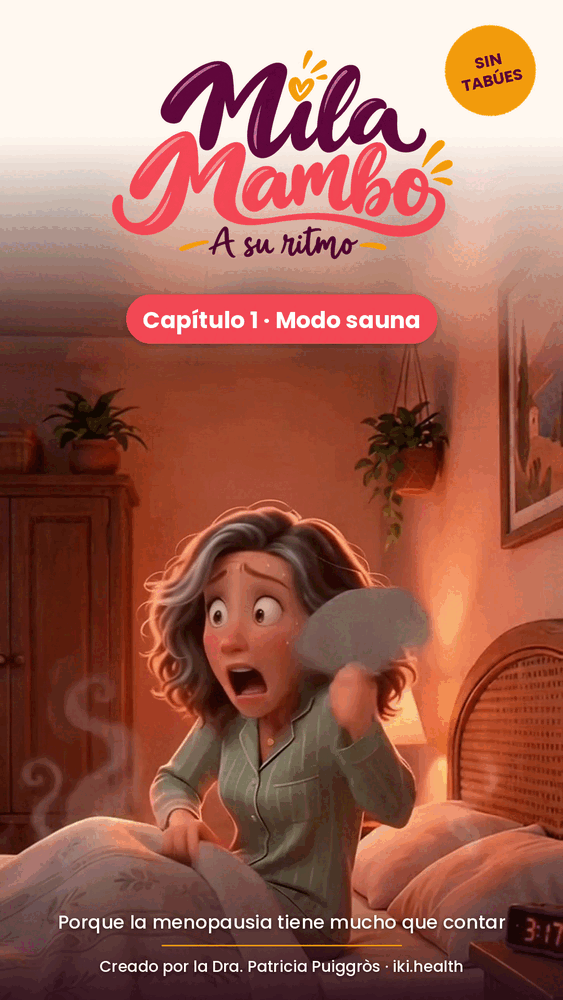
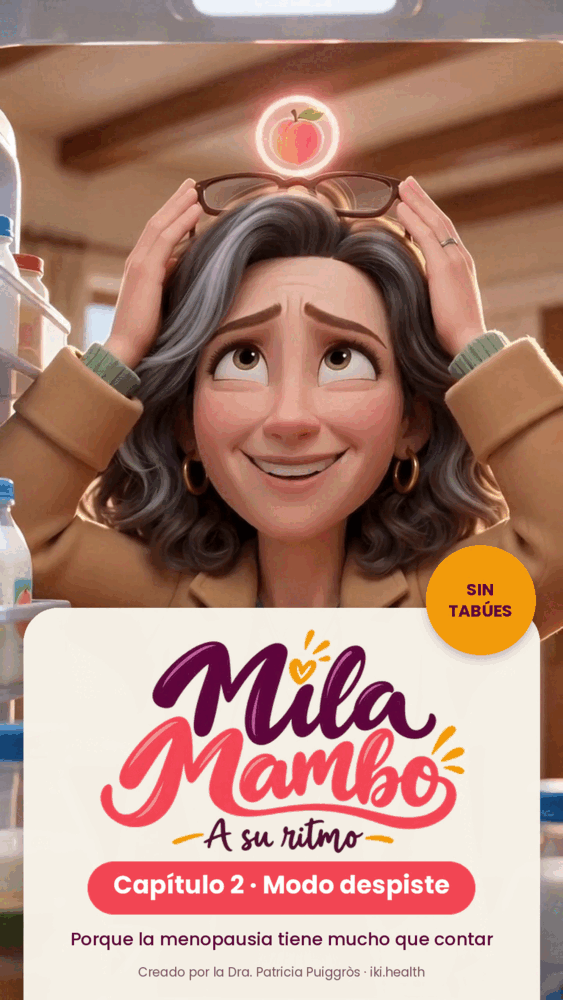
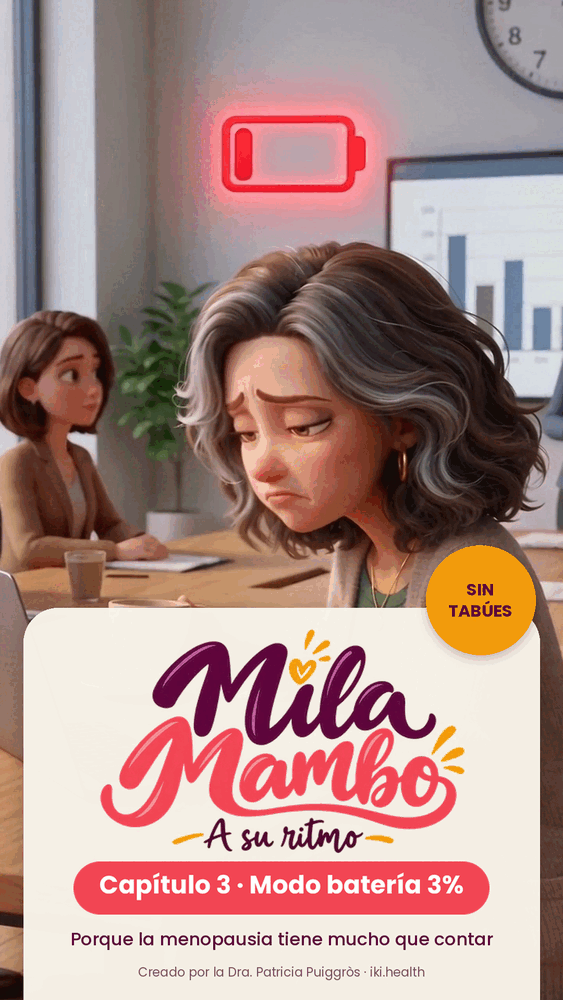
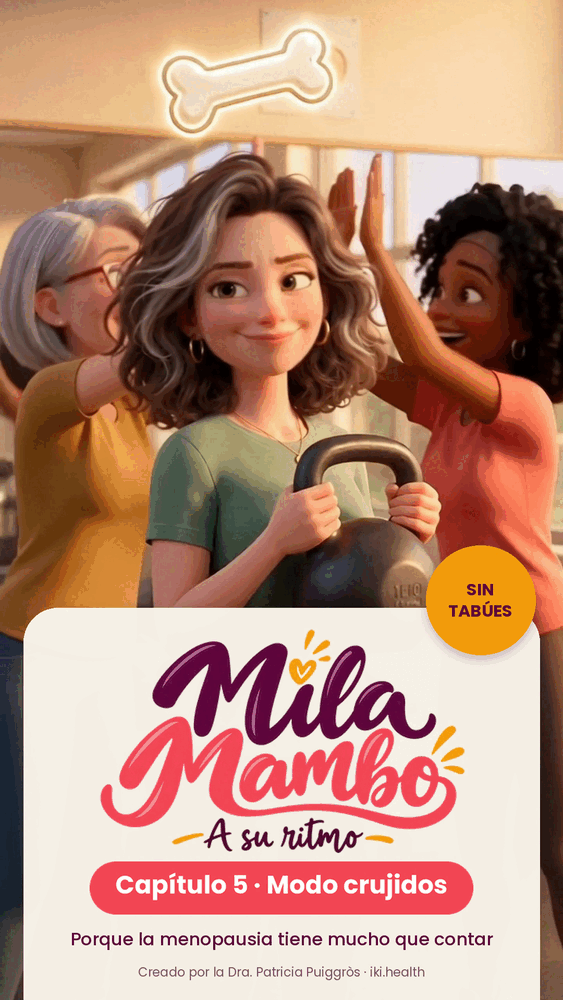
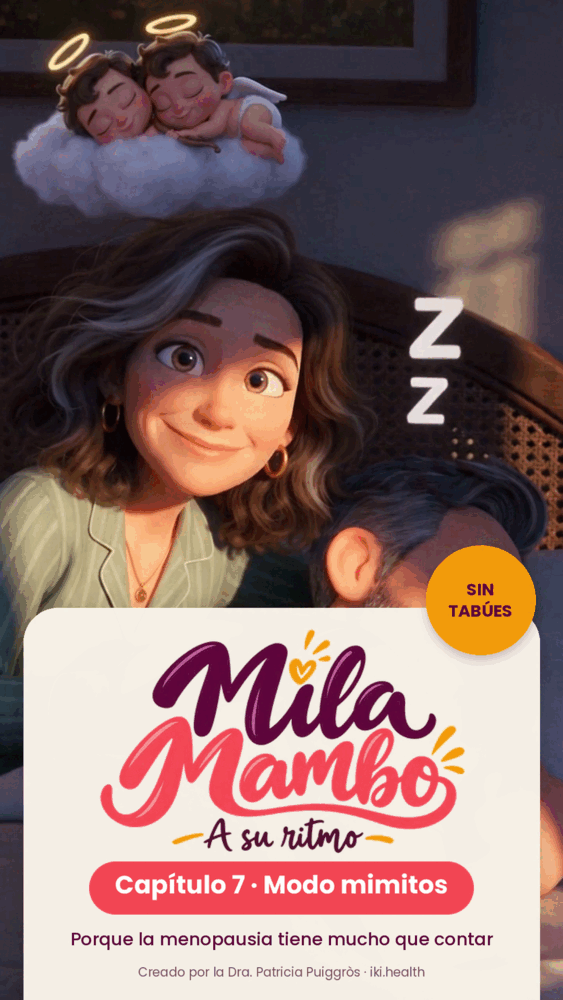
Chapter 7 · 11:00 p.m.
Can-We-Just-Cuddle? Mode
Libido and intimacyFocus: sexualityFocus: relationships and self-care
Mila’s moment
Mila wants closeness, but desire seems to have taken an unannounced vacation. Fatigue, stress, body changes, dryness, pain, mood, medication, and relationship dynamics can all play a role.
Why it happensFalling estrogen can lead to dryness, less lubrication, changes in sensitivity, and pain with penetration; poor sleep, hot flashes, stress, mood, body image, relationship problems, and some medications —for example, certain antidepressants— can also play a part. If sex hurts, the body learns to anticipate pain and desire usually drops even further: it’s not a lack of willpower, it’s protection.
What helps MilaShe stops demanding that she “be in the mood” as if it were just another task on her list. She talks to her partner, rediscovers touch without pressure, uses lubricant if she needs it and gets the dryness or pain checked. The goal isn’t to go back to an earlier version of herself: it’s to find an intimacy she feels like having now.
“I’m not broken. My operating system has new settings.”
PP
What the evidence says
Medically reviewed by Dr. Patricia Puiggròs
- First, no pain
Vaginal lubricants and moisturizers. They can reduce friction; if dryness persists, vaginal estrogen or other options are assessed individually with a professional.
- Desire
Take the pressure off performance. More time, touch, communication, and other forms of intimacy can help so that arousal doesn’t have to appear on command.
- Body and mind
Look after sleep, stress, movement, and self-esteem. They’re not a magic libido button, but they are part of the context that supports sexual wellbeing.
- Medical options
If low desire is causing you distress, seek advice. Genitourinary symptoms, mental health, medication, and the relationship should all be reviewed. In selected cases, a specialist may consider hormone therapy; testosterone is not for everyone and should not be used without supervision.
Sources: The Menopause Society · Sexual Health · NHS · Menopause treatment · NHS · Vaginal dryness.
Medically reviewed by Dr. Patricia Puiggròs · IKI Health
When to talk to a healthcare professional
Talk to a healthcare professional if lack of desire worries you, if there’s dryness or pain lasting weeks, bleeding after sex, sores, abnormal discharge, significant mood changes, or if you suspect a medication is playing a role. You don’t have to resign yourself or self-medicate.